Formby houses span Edwardian villas, 1930s semis and newer builds along Church Road. All three suit a bespoke kitchen — but the door style changes the feel of the room completely.
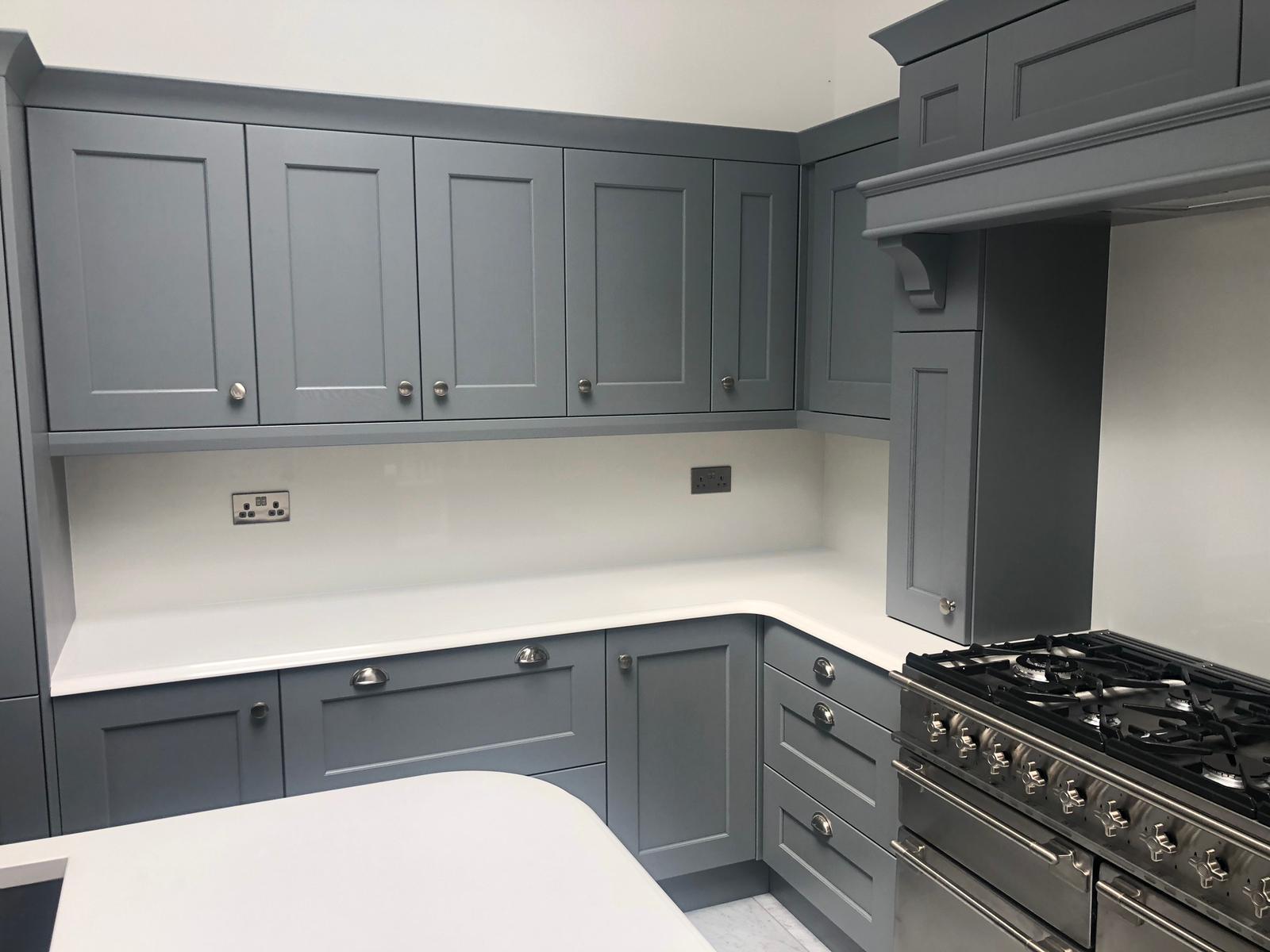
Shaker. A classic in-frame shaker gives a Formby kitchen weight and permanence. The painted frame and recessed panel reads as traditional, but with a quartz worktop and a Belfast sink it sits well in both a Victorian pine-tree-road house and a 1990s build.
Use shaker when the rest of the house leans traditional — original floors, cornicing, panelled doors. Pick knob or cup handles in brass or nickel and the kitchen quietly belongs.
Handleless. A flush handleless kitchen reads as modern and quiet. The absence of hardware means the eye runs across the cabinetry without stopping, which works beautifully in open-plan Formby extensions.
Use handleless when the rest of the space is already contemporary — large glazing, plastered walls, poured floors. Pair with a mitred-edge quartz worktop and a flush induction hob and it almost disappears into the wall.
The in-between. A plain shaker (no cornice, no plinth detail) with push-to-open hardware is the fastest-growing style we fit. It keeps the frame-and-panel feel but reads cleaner. It is often the right answer in a half-renovated house.
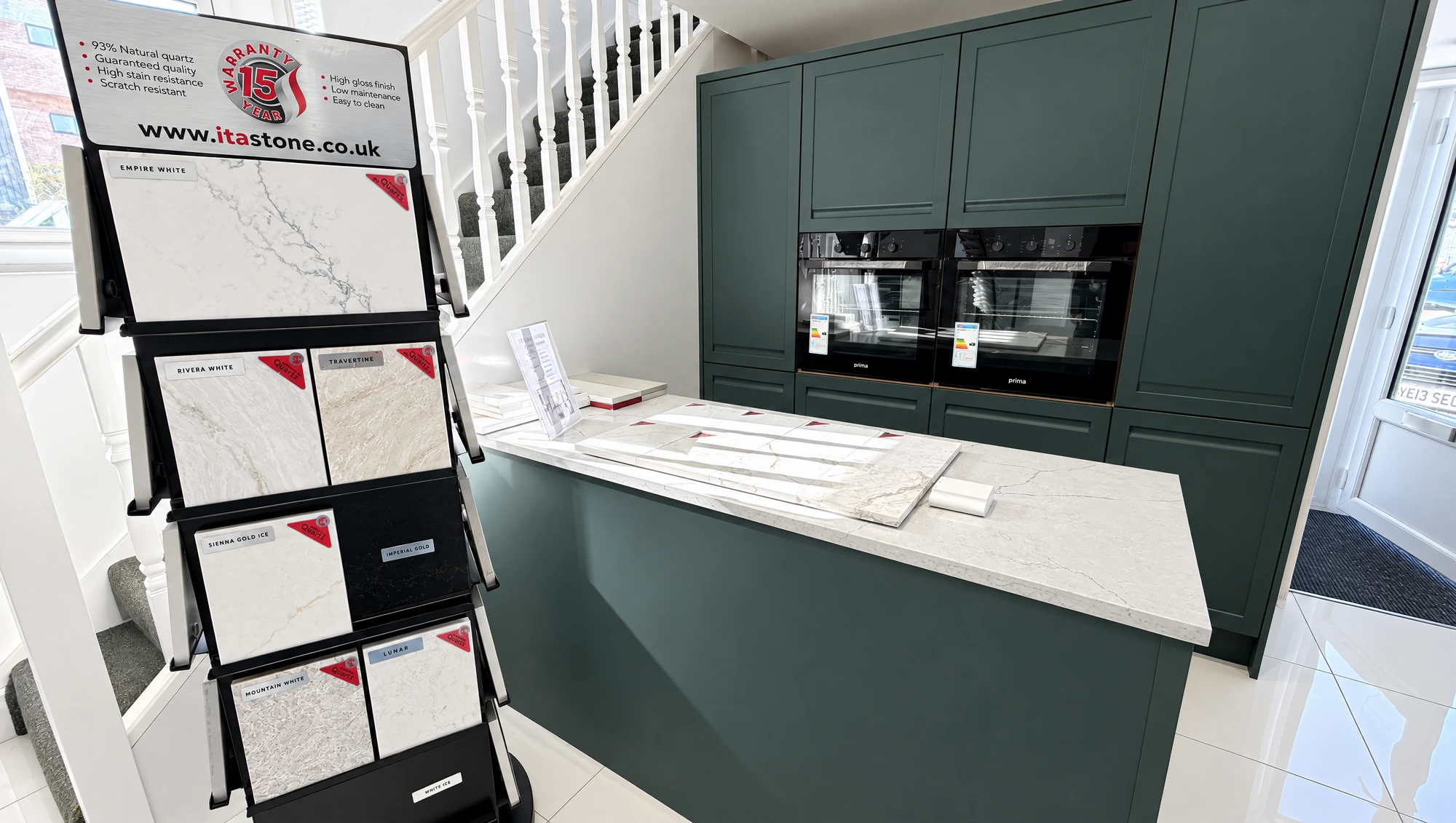
Still unsure? Visit the Shakespeare Street showroom — four complete kitchens on display, so you can open and close everything before you choose.